
Pot Light Fixture Types
Compare slim canless lights, traditional housings, retrofit modules, fixed trims and gimbals by fit, performance, rating and serviceability.
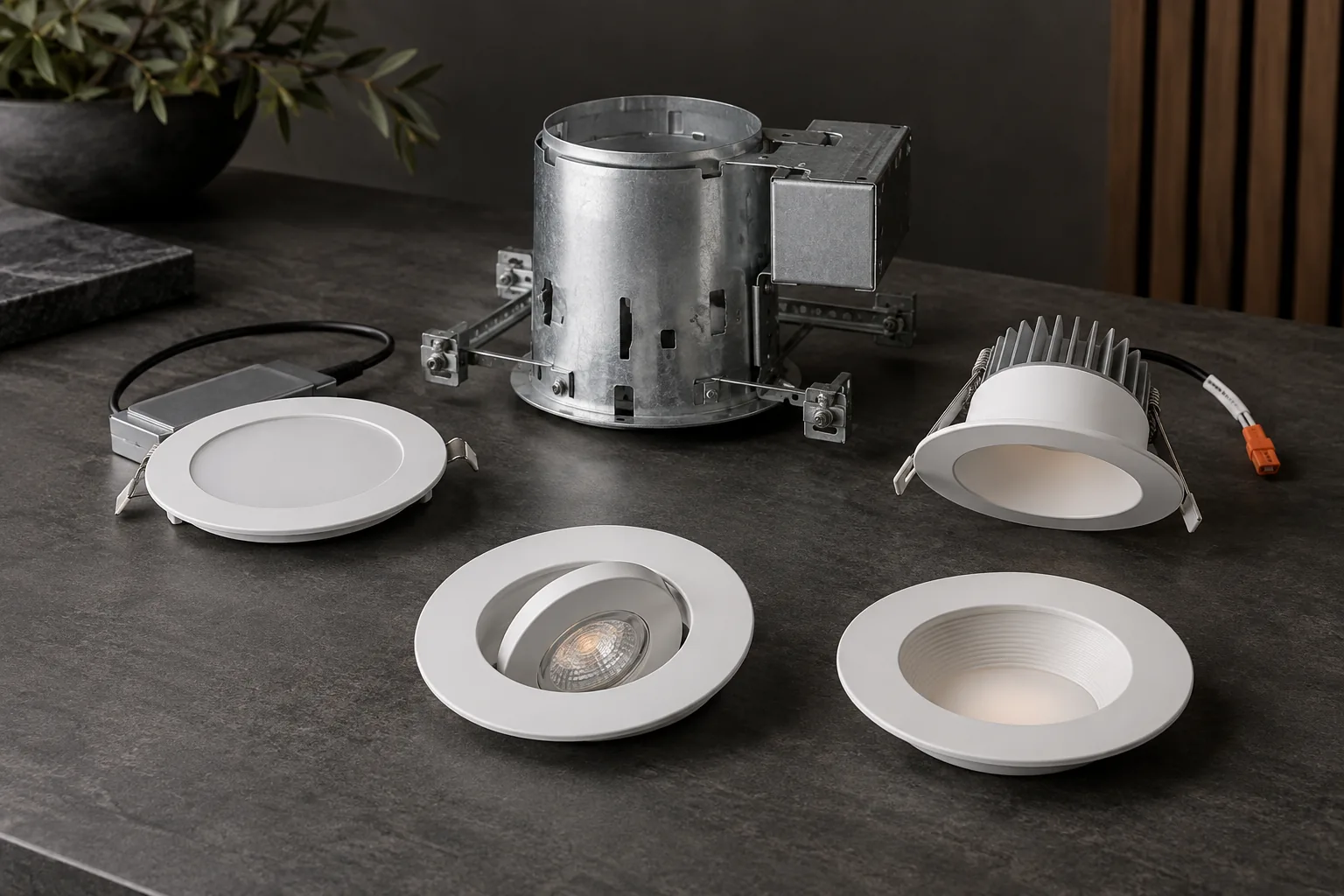
Start with the ceiling and the lighting task
Fixture categories are not interchangeable simply because they create the same size opening. Ceiling depth, insulation, location rating, beam control, trim appearance and future service all affect the choice. The lighting task comes first: broad ambient light, focused task light and wall or artwork accents may require different optics.
Review manufacturer instructions and approval markings for the exact product. A marketplace description or a similar-looking trim does not establish compatibility with a housing, driver, dimmer or location.
- Ceiling depth and obstruction clearance
- Insulation-contact requirements
- Damp or wet-location suitability
- Beam spread and delivered output
- Driver and connection access
- Replacement path and warranty documentation
Slim and canless modules
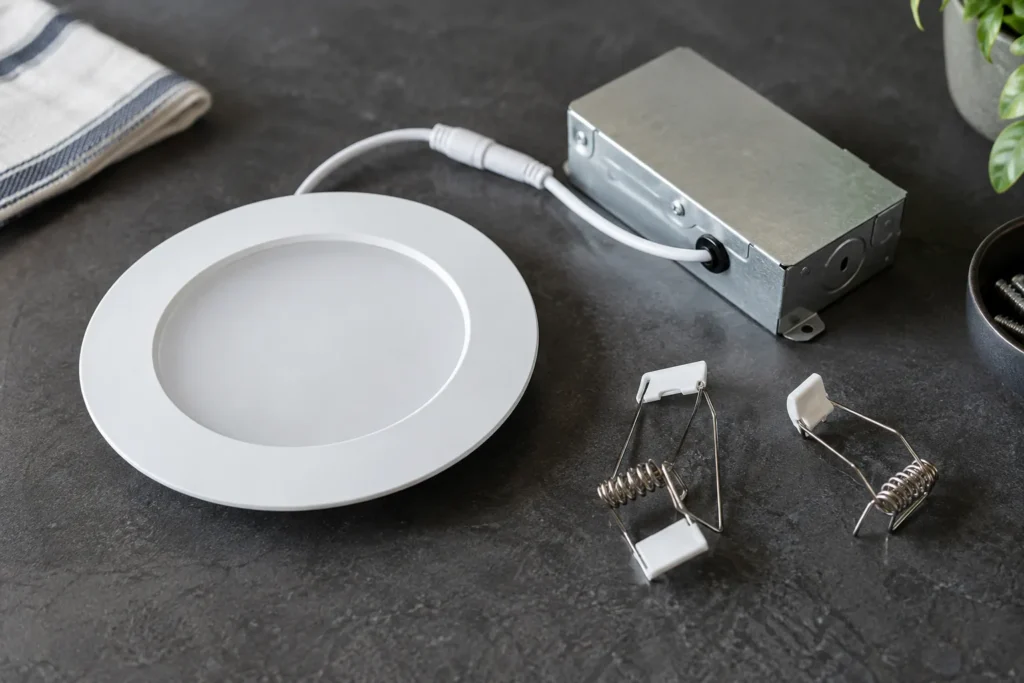
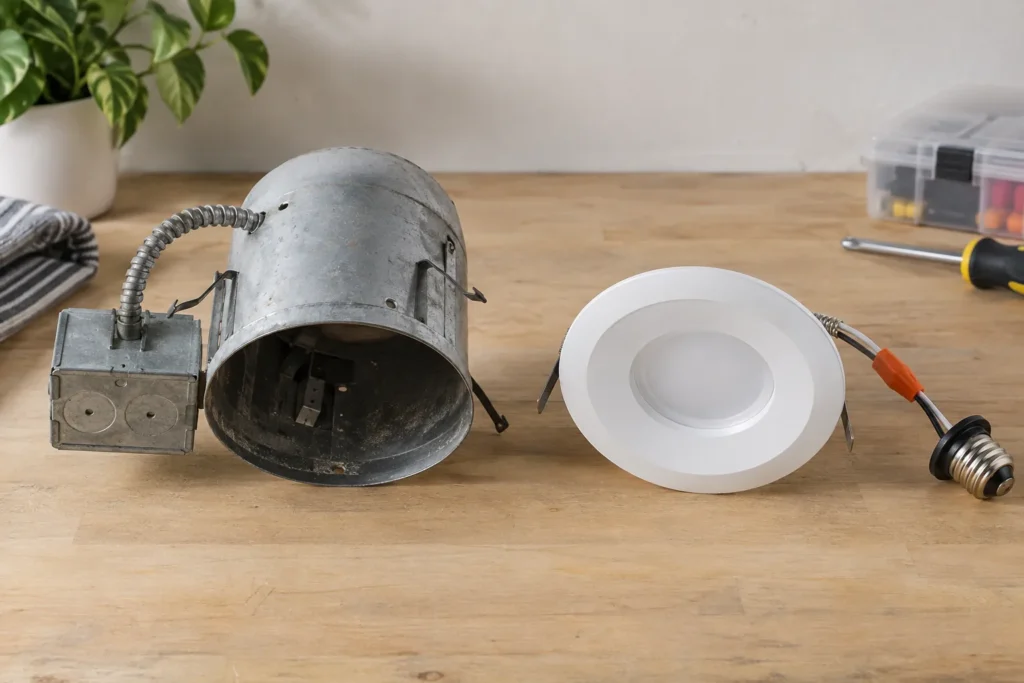
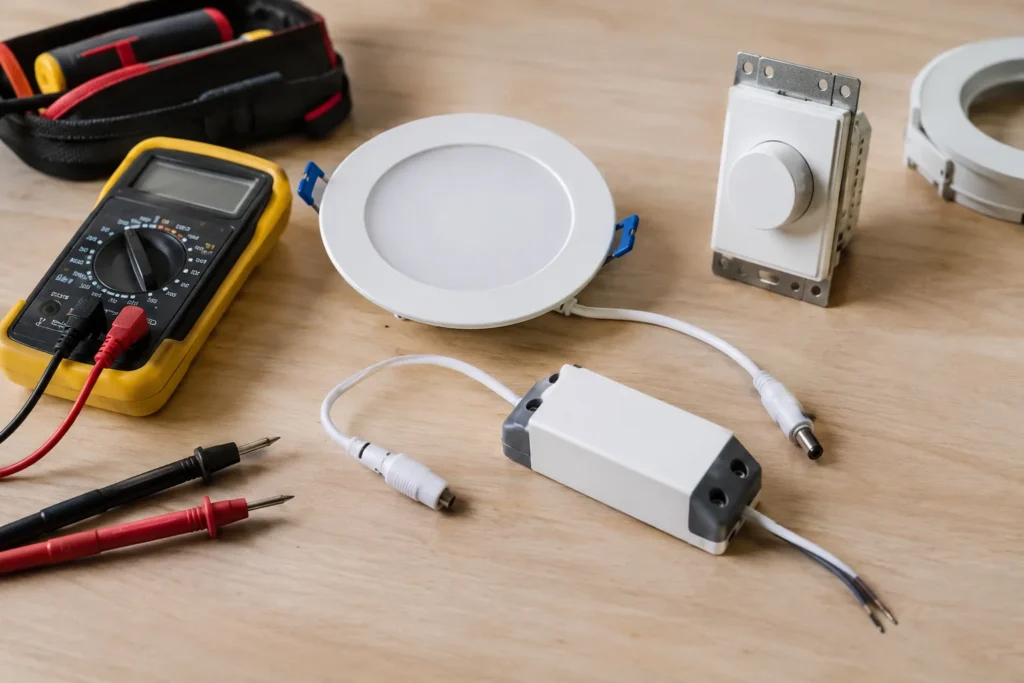
Slim modules use a low-profile light connected to a separate driver or junction component. They are valuable where a traditional housing will not fit and can be installed through a compact ceiling opening. They still require a compliant cable connection, appropriate clearances and a driver location that remains serviceable.
Because the luminous surface can sit close to the ceiling plane, some slim products appear bright at the aperture. Deeper-regress slim designs can improve visual comfort. Product depth, driver size and spring-clip clearance should be checked before assuming the fixture fits below every duct or joist edge.
Traditional housings
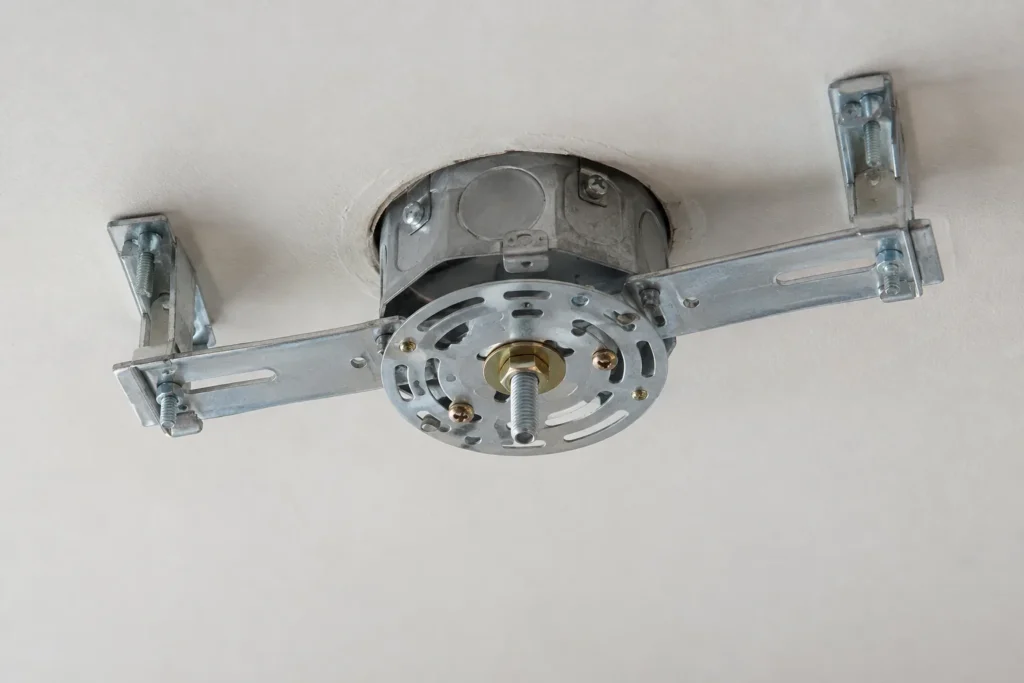
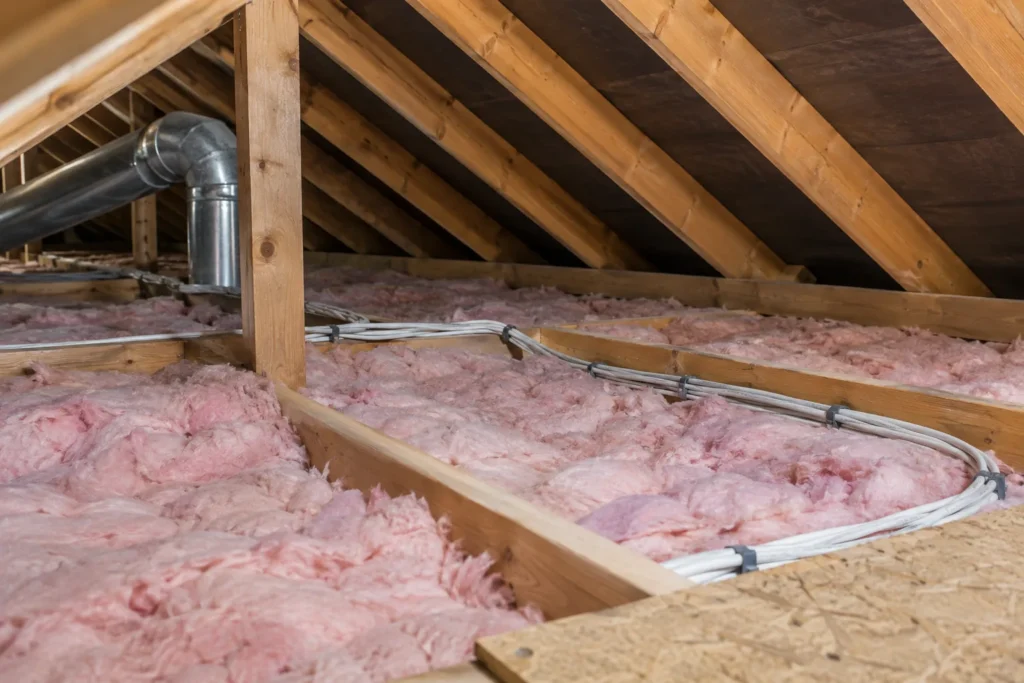
A traditional recessed housing occupies more ceiling depth and accepts a lamp or module with a visible trim. Housings can provide good cutoff, thermal management and a familiar service path when correctly selected. Remodel and new-construction versions use different mounting methods.
Existing housings should be identified before selecting retrofit parts. Aperture size alone is not enough. Socket type, housing label, trim retention and compatibility listings determine whether a retrofit module is appropriate.
Retrofit LED modules
Retrofit modules update compatible older housings while using the existing opening. They can reduce energy use and heat compared with halogen or incandescent lamps, create a cleaner trim and provide consistent colour. They should be listed for or otherwise permitted with the housing and installed according to instructions.
A retrofit does not correct a damaged housing, poor connection or unsuitable dimmer automatically. If modules flicker, buzz or fail repeatedly, the installation and control should be diagnosed rather than cycling through replacements.
Fixed and gimbal optics
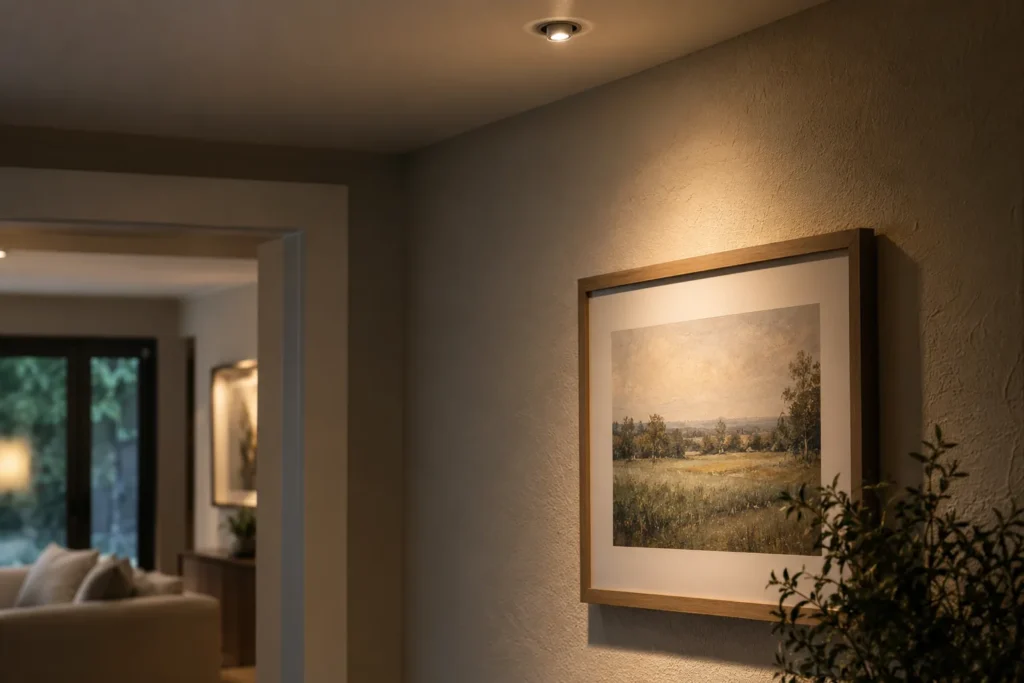
Fixed downlights support general illumination and work surfaces when the ceiling location suits the target. Gimbals allow the beam to aim toward a wall, artwork, fireplace or sloped-ceiling direction. Adjustable fixtures should be used purposefully; a room full of visibly tilted trims can look unsettled.
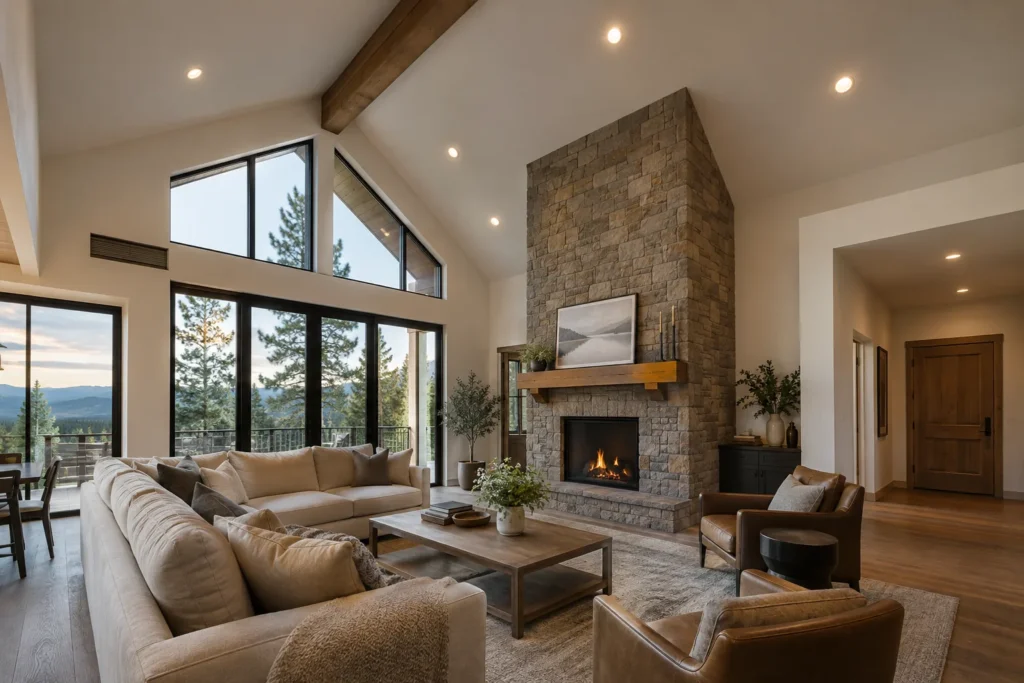
Beam spread and delivered output matter with both types. A narrow beam creates contrast and a smaller pool; a wide beam blends more gently. Ceiling height changes the size and intensity of that pool at the working plane.
Trims, glare and aperture appearance
White flat trims can visually recede into a ceiling, while dark or metallic trims become a stronger design element. A deeper aperture can shield the bright source from normal sightlines. Baffles and reflectors affect appearance and beam control. The same trim choice may feel comfortable in a hallway and intrusive above a sofa.
Consider the fixture when it is on and off. Colour, flange width, depth and lens texture all influence the ceiling. In open-plan areas, using one coordinated family often looks calmer than mixing several unrelated trim designs.
Driver access and serviceability
Integrated LED products rely on electronic drivers. The product may fail at the light engine, driver or connection, so the service path should be clear. A remote driver buried where it cannot be retrieved defeats one advantage of a compact fixture.
Keep model numbers, receipts, colour settings and dimmer data. If an exact product is discontinued, those records make it easier to choose a replacement with similar opening size, output, appearance and control behaviour.
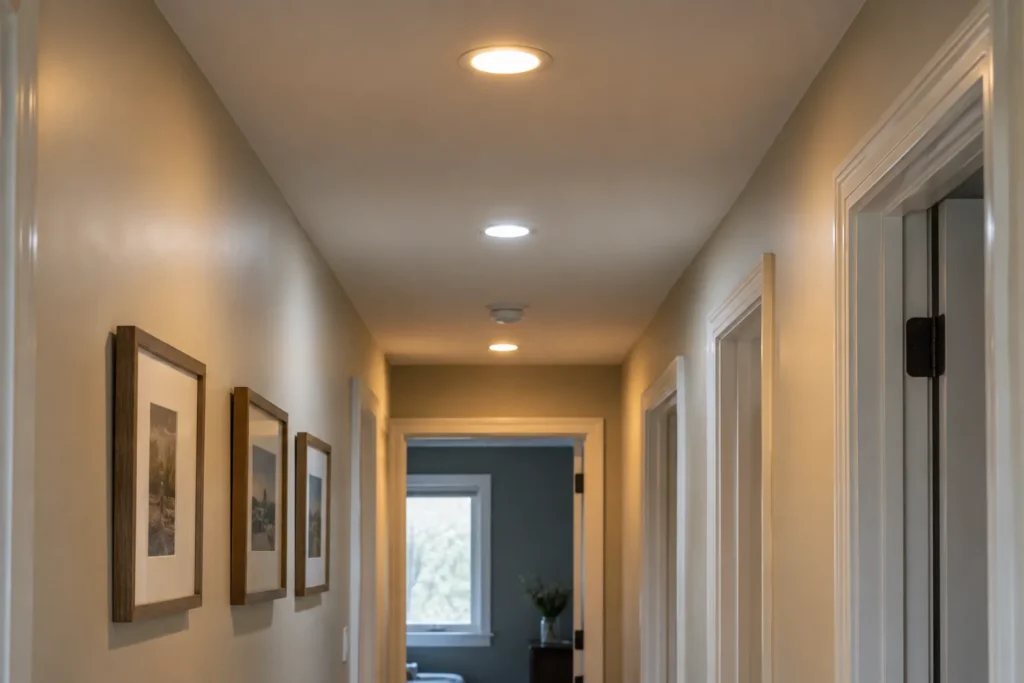
Apply pot light fixture types to the actual property
A guide is most useful when it produces a short list of facts to verify. Measure the room or exterior area, record ceiling height, identify the surfaces and activities that need light, and photograph the complete setting from normal viewpoints. Include existing fixtures, switches, vents, bulkheads, cabinetry and any safely accessible unfinished space. Those details make product and route discussions specific without pretending that photographs reveal concealed conditions.
Separate decisions into three groups. First are visible outcomes: where light should land, how bright the area should feel and which fixtures should be visually quiet or decorative. Second are installation conditions: framing, wiring, boxes, support, exposure and access. Third are operating choices: switching zones, dimming, sensors, schedules and connected features. A complete scope addresses all three instead of reducing the project to a fixture count.
Review the proposal from normal standing and seated positions, not only from directly below a fixture. A ceiling arrangement can look orderly while missing a counter, producing television glare or making a bright aperture conspicuous over a bed. Exterior positions also need views from the property edge, driveway and neighbouring directions. These observations translate general guidance into useful location priorities.
Ask the written quote to name the proposed products, quantities, control devices, access assumptions, protection, cleanup, notification handling and exclusions. Where a route or support condition cannot be verified in advance, the quote should explain how a change is assessed and approved. Drywall finishing, painting, cabinetry, structural work and other trades should be identified clearly rather than assumed.
After installation, review output, glare, dimming and control operation in the conditions where the lighting will be used. Exterior aiming should be checked after dark from the property edge and neighbouring directions. Keep the layout, product model numbers, colour settings, control data and any Certificate of Acceptance with the property records so future service does not begin from guesswork.
- Verify the room, target surfaces and ceiling height.
- Match product data to the exact location.
- State concealed-condition and finish assumptions.
- Confirm the Licensed Electrical Contractor responsible for electrical work.
- Retain the final product, control and acceptance records.
Pot Light Fixture Types FAQs
Are slim pot lights better than traditional housings?
They solve different conditions. Slim products fit shallow spaces; traditional housings can offer strong cutoff and a familiar service path. Ceiling construction, desired optics and future access should decide.
Can a slim light go directly below a joist?
Only if the complete product, opening, clips, driver and clearances fit as instructed. The word slim does not guarantee fit at every obstruction.
What is a retrofit module?
It is an LED assembly designed to update a compatible existing recessed housing, often replacing the lamp and visible trim together.
When should a gimbal be used?
Use a gimbal when the light must aim toward a wall, artwork, fireplace, sloped surface or other target that a fixed downlight cannot serve well.
Why does driver access matter?
The driver is a serviceable electronic component. If it fails, it must be reachable according to the installation method rather than permanently buried.
Plan the lighting around the space—not a generic grid.
Share the room or exterior area, ceiling height, current lighting, preferred fixtures and any photos that show access conditions. That information makes the first conversation more useful.