
Oakville Exterior Lighting Guide
Plan soffit, motion, pathway, porch and backyard lighting with controlled direction, sensible timing and respect for neighbouring properties.
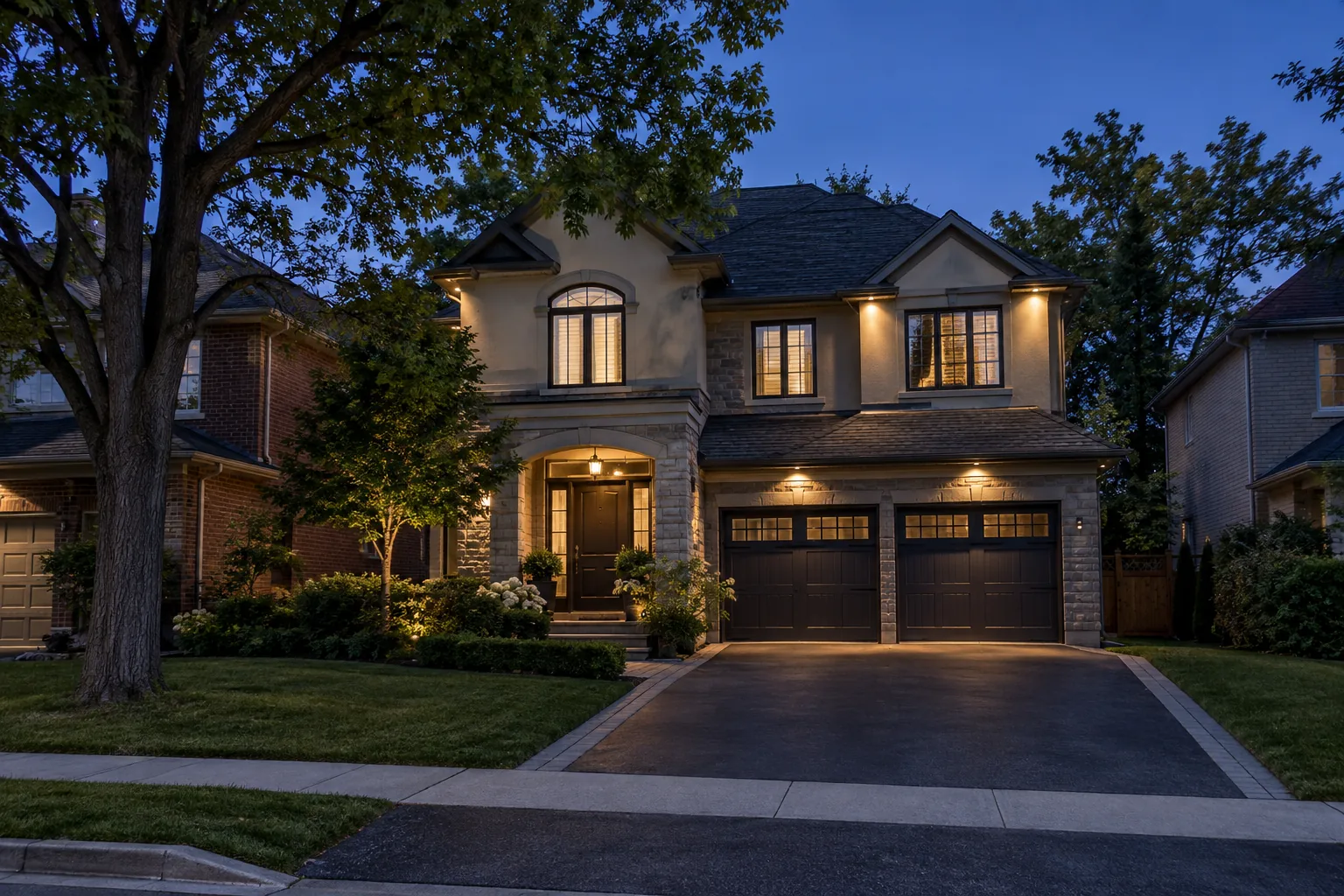
Give every exterior fixture a job
Exterior lighting can support entry, movement, outdoor living and architectural definition. Problems begin when fixtures are added only to make the property brighter. A porch light should reveal the door and visitor; a path light should show a turn or change in level; a soffit light should support a selected elevation rather than paint the entire façade.
Write the purpose beside each proposed location. If two fixtures perform the same job, one may be unnecessary. This simple check helps reduce glare, energy use and a cluttered roofline.
- Entrances and address visibility
- Garage and driveway tasks
- Side-yard gates and routes
- Patio or deck activity
- Steps and changes in level
- Selected landscape or masonry features
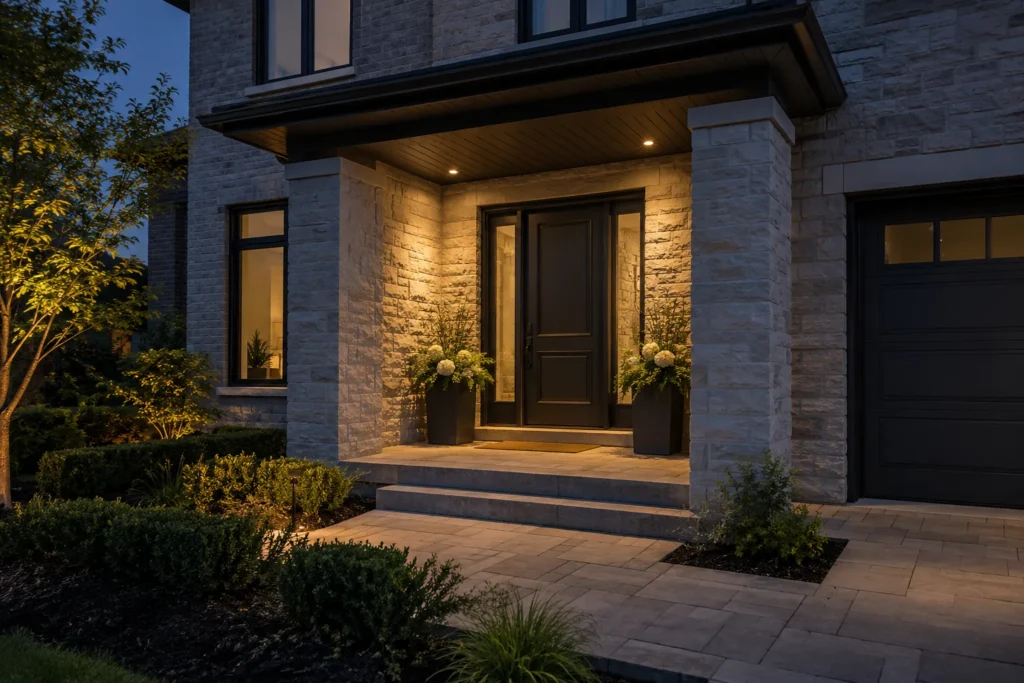
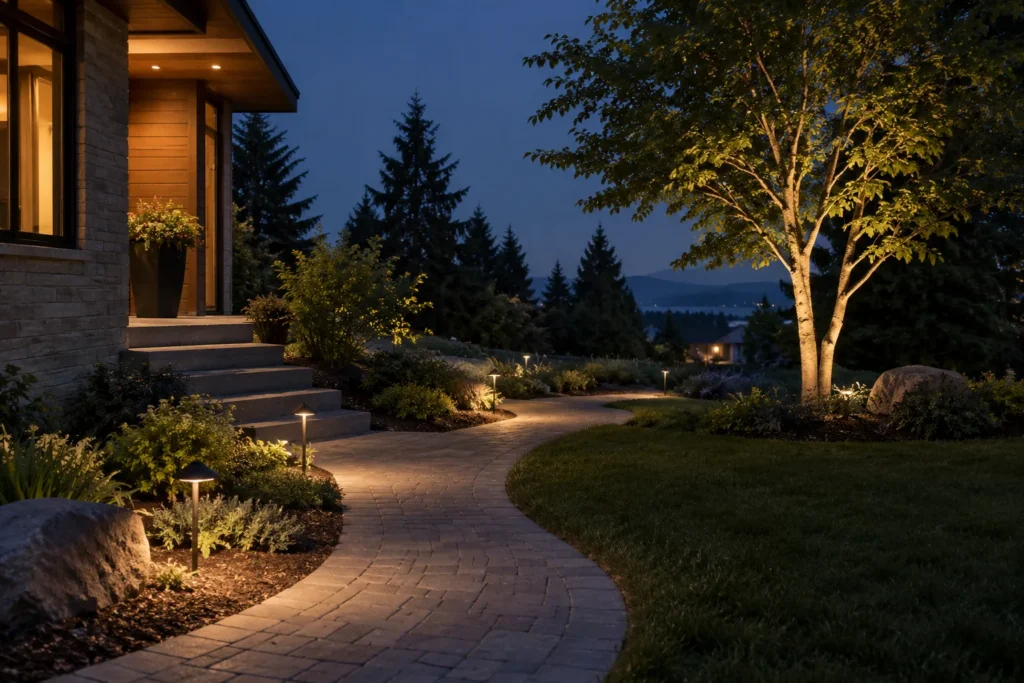
Oakville’s nuisance-based lighting language
Oakville’s nuisance provisions address unusual quantities or types of light shining on the land of others so as to cause a nuisance. The wording does not create one universal fixture count or brightness value for every home. Project decisions should therefore focus on outcome: where the light lands, how intense it appears from neighbouring properties and how long it operates.
Municipal requirements can change, and other rules may apply to specific properties, heritage settings or development approvals. Confirm current Town information when a project raises a property-specific question. This guide does not turn general nuisance language into a technical photometric standard.
Aim down and shield the source
Aiming light downward keeps more output on the intended surface and reduces the visibility of the bright source. Shielding is especially useful for wall-mounted and landscape fixtures. Soffit lights should be selected and placed so they do not throw strong light through upper windows or across a property line.
Check the result from several viewpoints after dark: the front walk, across the street, each neighbouring edge and inside bedrooms that face the fixtures. A fixture can appear modest from directly below and uncomfortable from a distant second-floor window.
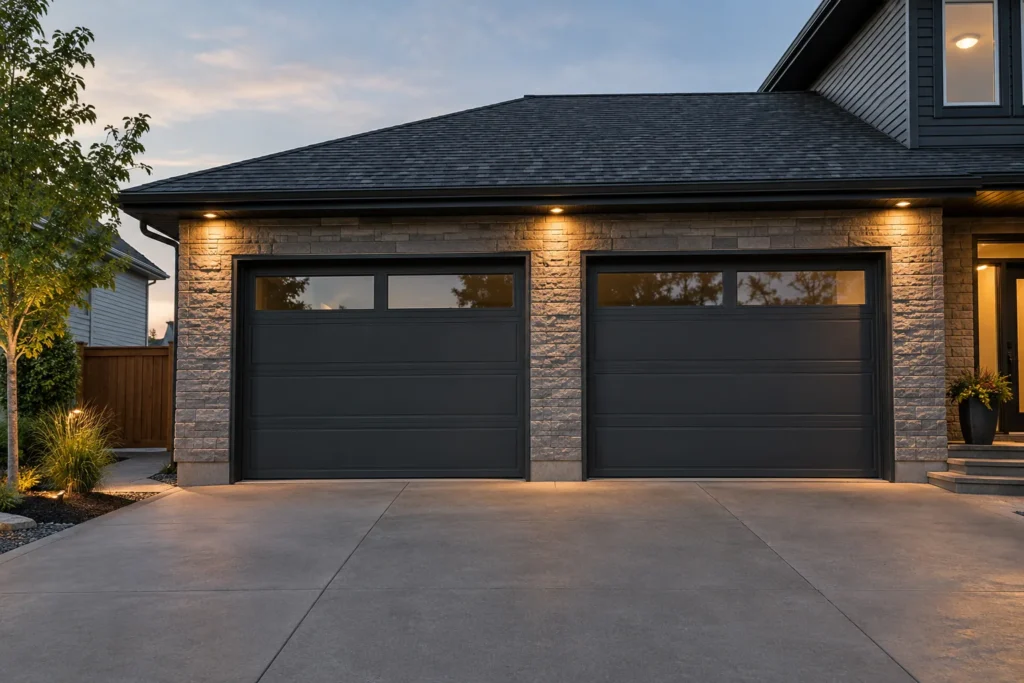
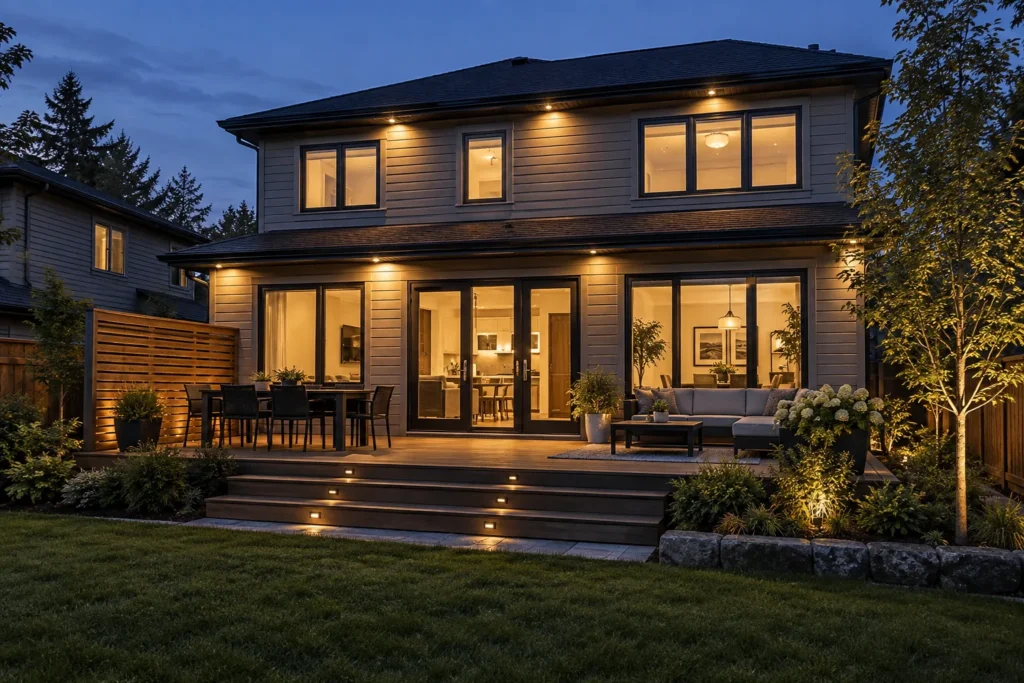
Brightness and colour temperature
More lumens do not always improve visibility. Very bright light can create harsh contrast, leaving areas outside the beam harder to see. Choose output for the mounting height, beam spread and target surface. Warm or warm-neutral exterior light often produces a less stark residential appearance than cooler high-output light.
Reflective pale stone, glass and snow can make a fixture appear brighter than expected. Dimming, lower-output products or wider spacing may be more effective than adding more fixtures.
Timers, photocells and motion sensors
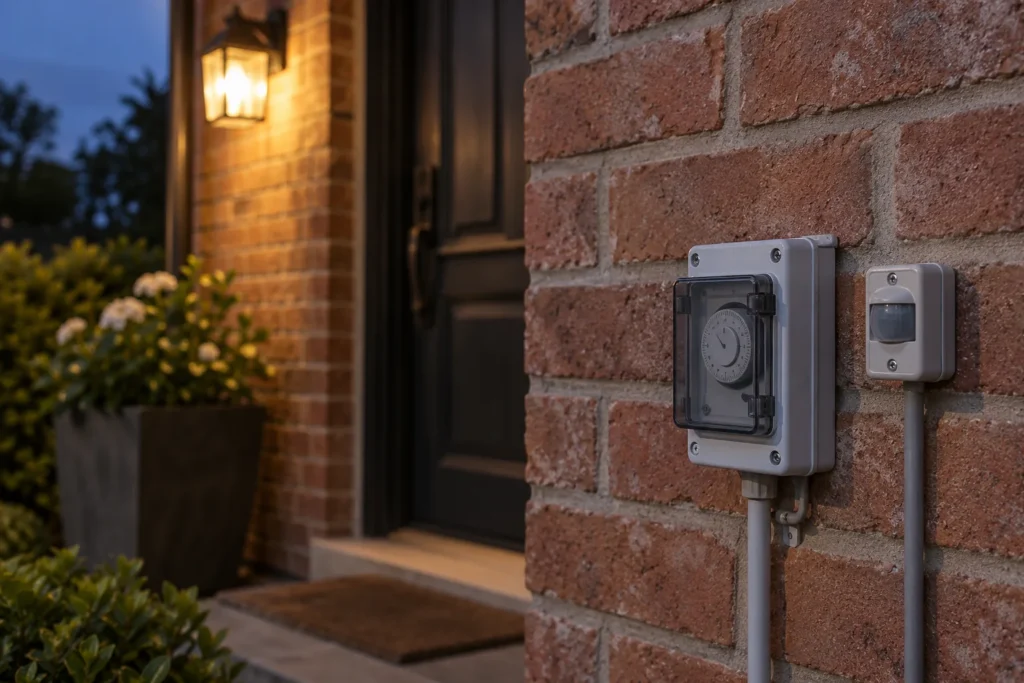
Controls keep exterior lighting useful without running every zone at full output all night. Photocells respond to ambient light; astronomical timers use sunset and sunrise schedules; smart controls can add scenes and remote adjustment. A manual override remains useful when technology or schedules change.
Motion lighting should cover the intended approach. Aim sensors away from sidewalks, moving branches and adjacent driveways where possible. Set the hold time long enough for the task without keeping a high-output fixture on unnecessarily.
Soffits, pathways and outdoor rooms
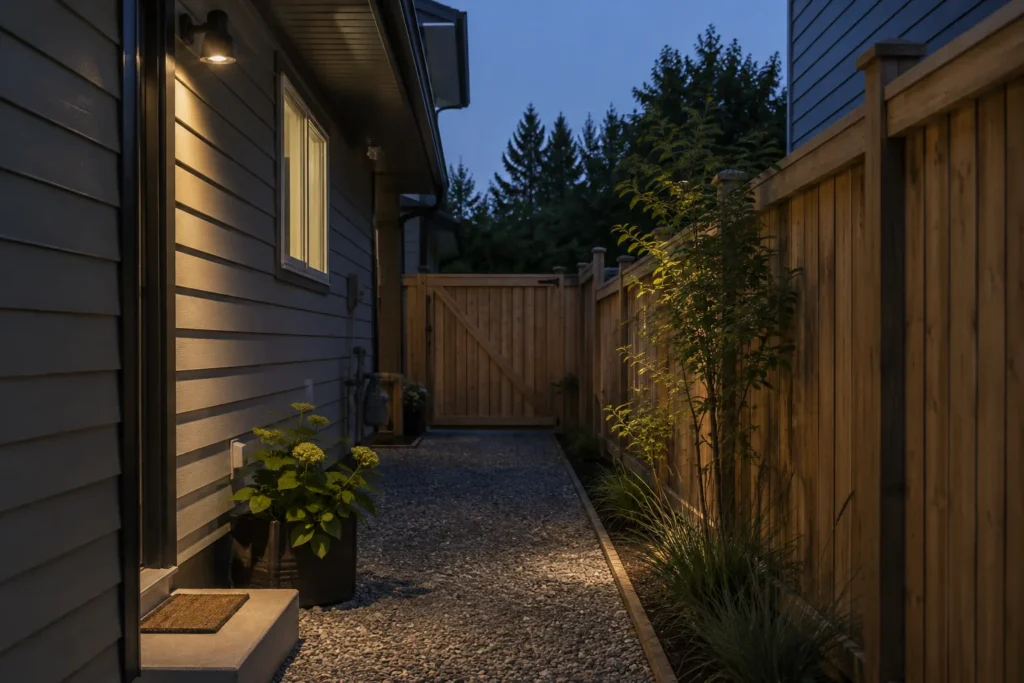
Soffit lights define entrances, garage bays and selected architectural rhythm. Path lights reveal movement near the ground. Deck and patio lighting supports food preparation, seating and steps. These layers should be controlled separately because they serve different hours and brightness needs.
Avoid placing every tree, eave and fence on the same high-output scene. Outdoor spaces generally look more refined when some areas remain dark and the visual hierarchy is clear.
A neighbour-aware commissioning check
The final step is not only switching the system on. Wait until full darkness, operate each zone separately, adjust aiming and sensitivity, then view the property from outside the beam. Check bedroom windows, camera images and reflections on glass.
Record timer schedules, sensor settings and fixture model information. Seasonal changes, landscape growth and snow may justify later adjustment. A system that can be tuned is more useful than one installed at maximum output with no practical control.
- Confirm no fixture shines directly into nearby windows.
- Check camera images for glare and washout.
- Reduce sensor triggers from public movement.
- Use separate schedules for task and decorative zones.
- Recheck aiming after landscape growth or fixture service.
Apply oakville exterior lighting guide to the actual property
A guide is most useful when it produces a short list of facts to verify. Measure the room or exterior area, record ceiling height, identify the surfaces and activities that need light, and photograph the complete setting from normal viewpoints. Include existing fixtures, switches, vents, bulkheads, cabinetry and any safely accessible unfinished space. Those details make product and route discussions specific without pretending that photographs reveal concealed conditions.
Separate decisions into three groups. First are visible outcomes: where light should land, how bright the area should feel and which fixtures should be visually quiet or decorative. Second are installation conditions: framing, wiring, boxes, support, exposure and access. Third are operating choices: switching zones, dimming, sensors, schedules and connected features. A complete scope addresses all three instead of reducing the project to a fixture count.
Review the proposal from normal standing and seated positions, not only from directly below a fixture. A ceiling arrangement can look orderly while missing a counter, producing television glare or making a bright aperture conspicuous over a bed. Exterior positions also need views from the property edge, driveway and neighbouring directions. These observations translate general guidance into useful location priorities.
Ask the written quote to name the proposed products, quantities, control devices, access assumptions, protection, cleanup, notification handling and exclusions. Where a route or support condition cannot be verified in advance, the quote should explain how a change is assessed and approved. Drywall finishing, painting, cabinetry, structural work and other trades should be identified clearly rather than assumed.
After installation, review output, glare, dimming and control operation in the conditions where the lighting will be used. Exterior aiming should be checked after dark from the property edge and neighbouring directions. Keep the layout, product model numbers, colour settings, control data and any Certificate of Acceptance with the property records so future service does not begin from guesswork.
- Verify the room, target surfaces and ceiling height.
- Match product data to the exact location.
- State concealed-condition and finish assumptions.
- Confirm the Licensed Electrical Contractor responsible for electrical work.
- Retain the final product, control and acceptance records.
Oakville Exterior Lighting Guide FAQs
Does Oakville set one brightness limit for all residential exterior lights?
The nuisance language reviewed for this guide is outcome-based rather than one universal residential fixture limit. Current property-specific requirements should be confirmed with the Town when needed.
How many soffit lights should a house have?
There is no universal number. Prioritize entrances, garage bays and selected architectural relationships, then choose output and spacing that avoid a dotted or overlit roofline.
Are motion lights always better for security?
They are useful when aimed and adjusted well. Poor placement can trigger constantly, wash out cameras or spill toward neighbours.
What colour works outdoors?
Warm and warm-neutral light often produces a comfortable residential result. Output, shielding and direction remain more important than colour temperature alone.
When should exterior lighting be adjusted?
Check it after dark at installation, then revisit after landscape growth, snow conditions, camera changes or neighbour concerns.
Plan the lighting around the space—not a generic grid.
Share the room or exterior area, ceiling height, current lighting, preferred fixtures and any photos that show access conditions. That information makes the first conversation more useful.