
What Should a Pot Light Installation Quote Include?
A complete quote checklist covering fixtures, layout, wiring, controls, ceiling access, finish repair, notification, exclusions and changes.

A useful pot-light quote identifies the actual product, layout, electrical scope, access assumptions, controls, finish responsibilities and documentation. A single unexplained fixture price is not enough to compare projects.
Start with a written description of the finished result
The quote should name the rooms or exterior areas, intended fixture quantity, approximate layout, lighting layers and control zones. It should distinguish new locations from direct replacements and identify decorative fixtures, cabinet lighting or exterior zones that are part of the same project. A count without locations can hide meaningful differences in routing and performance.
Room dimensions, ceiling height and fixed features should support the description. If the layout remains subject to field investigation, that should be explicit. Identify which positions are critical to counters, islands, art or circulation and how reasonable adjustments will be approved if a joist or duct conflicts.
- Room and area names
- New versus replacement locations
- Fixture quantity and planned relationships
- Ceiling height and access condition
- Switching and dimming zones
- Known layout flexibility
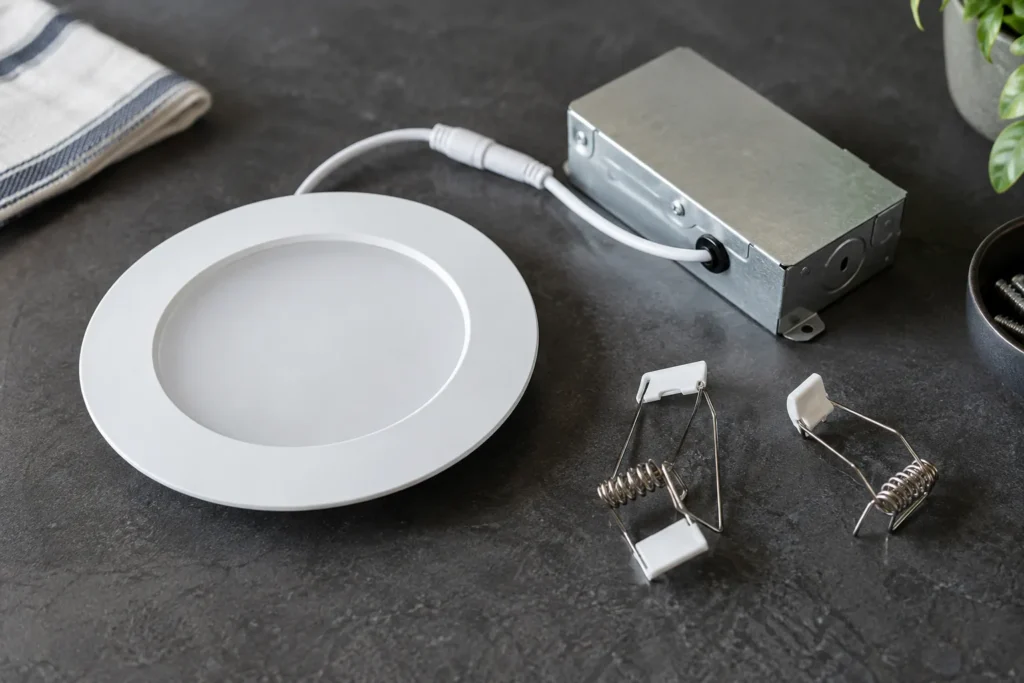
Name the fixture, not just LED pot lights
Products with similar visible trims can differ in lumen output, beam spread, aperture depth, colour rendering, driver quality, location rating, warranty terms and replacement availability. The quote should provide a manufacturer and model or a sufficiently precise specification. Selectable colour temperature, trim colour and opening size also need to be stated.
If the product may be substituted, define the approval process and equivalent performance criteria. A lower-cost fixture is not equivalent when it changes beam comfort, dimming, rating or future service. Retain product data and the installed setting with the property records.
- Manufacturer and model
- Delivered lumens and beam information
- Colour temperature and colour quality
- Trim size, colour and aperture style
- Damp, wet or insulation rating where needed
- Driver and replacement approach
Describe wiring, circuit and switching work
New pot lights may require cable routes, extensions from a suitable source, switch-box work, multi-location control or new circuits depending on the existing installation and proposed load. The quote should explain what has been assumed from visible conditions and what will be verified on site. An existing switch does not prove that every new location can be reached or that the circuit arrangement is suitable.
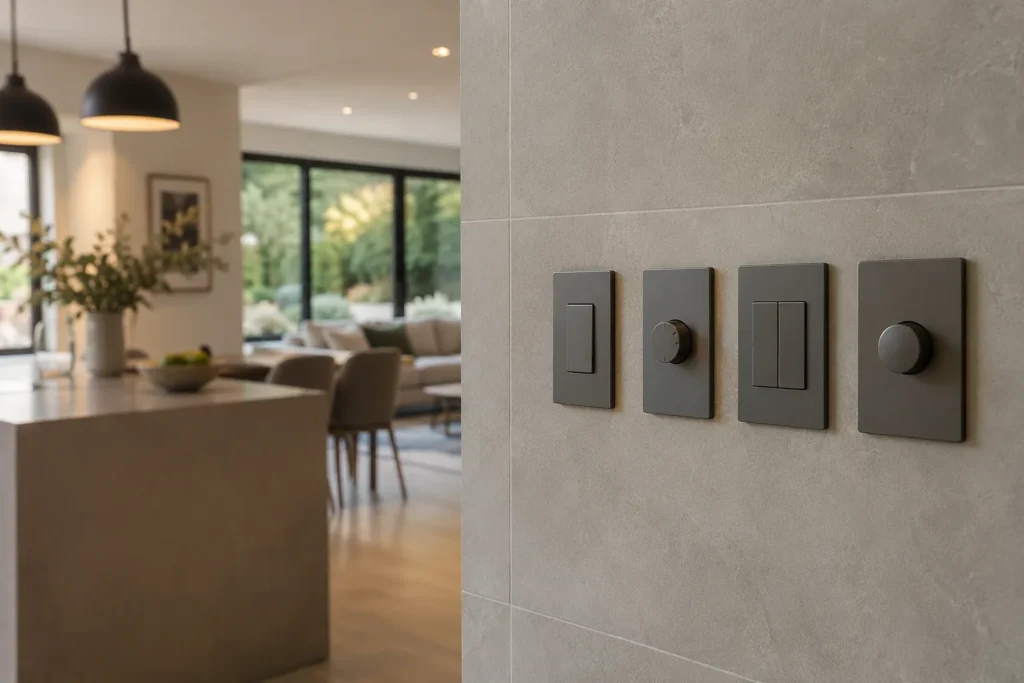
Controls should be identified by type and model where compatibility matters. The scope should say whether dimmers, smart switches, sensors, timers, plates and programming are included. If the homeowner supplies a control, responsibility for product suitability should be clear.
- Power source and circuit assumptions
- New cable routes
- Switch and box changes
- Multi-location control
- Dimmer or smart-control model
- Testing and setup
Make finished-ceiling assumptions visible
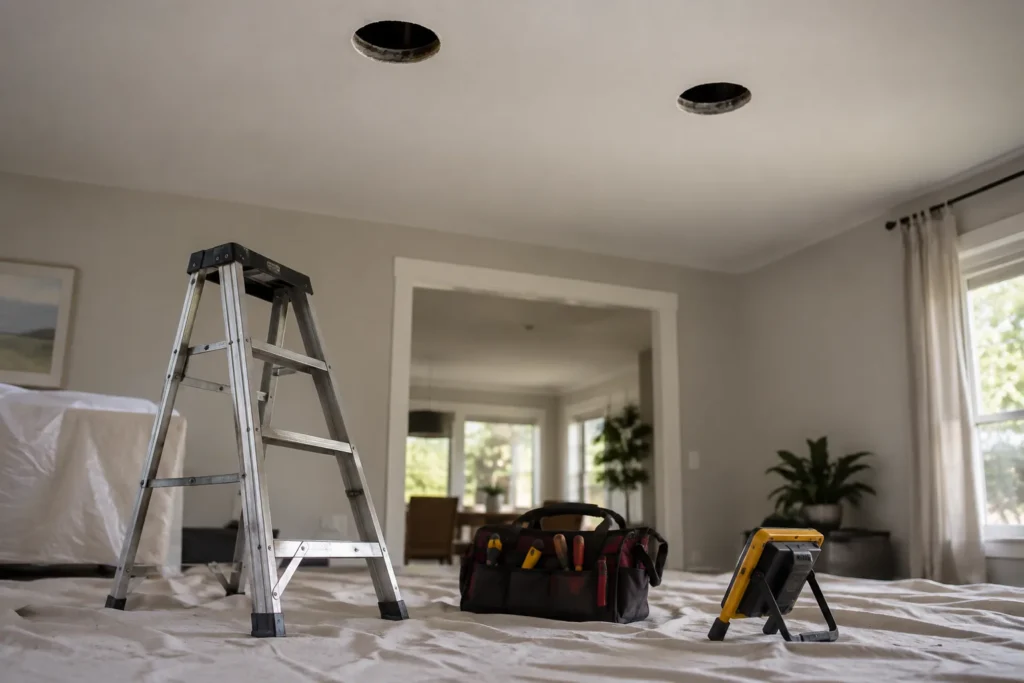
A completed ceiling conceals joists, blocking, ducts, pipes, insulation and existing cables. Photos and measurements improve planning but cannot guarantee a route. The quote should state the assumed access, whether small exploratory or routing openings may be needed and how an unexpected obstruction affects labour, schedule and approval.
Room protection and cleanup belong in this section. Identify floor and furniture covering, dust control, debris removal and access to occupied areas. High ceilings, stairwells and exterior elevations may require specialty ladders, scaffold or lifts; the quote should identify whether that equipment is included.
- Attic or unfinished access
- Finished-ceiling routing assumptions
- Possible investigation openings
- High-access equipment
- Room protection and cleanup
- Unknown-condition approval process
Separate electrical work from finish restoration
Cutting a fixture opening is part of installing the fixture. Repairing an access opening can involve board, backing, compound, several drying coats, sanding, texture, primer and paint. Those tasks are not interchangeable. The quote should say exactly where the electrical scope stops and which party handles each finish stage.
Existing paint may be difficult to match, and a repaired area can require repainting a larger ceiling plane. Specialty plaster, wood panels and acoustic finishes need separate planning. Clear finish boundaries make competing quotes comparable and help the homeowner schedule other trades without assuming their work is included.
- Electrical openings
- Drywall closing and backing
- Compound and sanding
- Texture matching
- Primer and painting
- Cabinet or trim alteration
Identify Ontario electrical responsibility
ESA states that only Licensed Electrical Contractors may be hired for residential electrical work in Ontario, subject to limited exemptions. The quote should identify the licensed business responsible for the electrical work. Verify current status using ESA’s official resources rather than relying only on a logo or informal statement.
The work determines whether an ESA notification is required. Where it is required, the Licensed Electrical Contractor responsible for the work handles the applicable process. The quote should state whether notification fees are included and who provides the Certificate of Acceptance after accepted work. That certificate relates to the work in the notification, not every system in the property.
- Licensed Electrical Contractor identity
- Current ECRA/ESA licence number
- Notification responsibility
- Notification fee inclusion
- Certificate of Acceptance delivery
- Scope covered by the notification
Read exclusions and change terms as carefully as inclusions
Common exclusions include drywall finishing, painting, hazardous-material work, structural alterations, cabinet modifications, fixture supply, programming, after-hours access and repair of unrelated existing defects. An exclusion is not inherently unreasonable; it becomes a problem when it is vague or appears only after work begins.
The quote should explain how changes are priced and approved. Extra work triggered by a concealed obstruction should be documented before proceeding when safe to pause. Product substitutions, fixture-count changes and added control locations also need written agreement. Clear change terms protect the original scope from becoming an open-ended estimate.
- List all excluded trades.
- Define concealed-condition changes.
- Require approval for substitutions.
- State hourly or unit rates where relevant.
- Record schedule effects.
- Keep change documentation.
Compare totals only after normalizing the scope
Place competing quotes beside one another and compare fixture model, quantity, switching, notification, access, finish work, cleanup and documentation. One total may include dimmers and notification while another omits both. A per-light amount is especially misleading when one project involves open framing and another requires finished-ceiling routing or high access.
Ask questions in writing and have the response incorporated into the final quote. Confirm payment schedule, quote validity, start assumptions and who supplies each fixture. Avoid selecting solely from a headline total before the product and access assumptions are aligned.
- Normalize product quality.
- Normalize fixture and control quantity.
- Compare access and finish assumptions.
- Check notification and documentation.
- Review cleanup and disposal.
- Confirm payment and change terms.
Prepare information that improves quote accuracy
Provide wide photographs, dimensions, ceiling height, existing fixture and switch counts, access above the room, desired lighting layers and product preferences. For a kitchen, include the cabinet plan. For a chandelier, provide weight and hanging dimensions. For exterior work, show the property edge and intended coverage. Do not open electrical boxes or enter unsafe spaces for a photograph.
A site review can confirm visible conditions and investigate some concealed factors, but it may not reveal every route before work begins. The strongest quote pairs careful investigation with clear assumptions. Keep the accepted quote, change records, product data, final layout and electrical acceptance documentation together for future service.
- Send useful wide photographs.
- Provide measured plans where available.
- Disclose known renovations and restrictions.
- Identify scheduling and access limits.
- Keep the complete project record.
Turn the article into a short site-review checklist
Before requesting a price, write down the decisions this article helped you make and the conditions that still require verification. Include dimensions, ceiling height, intended light targets, existing fixtures and controls, access above or beside the area, and product preferences. Wide photographs should show the full ceiling or exterior elevation and normal viewing positions. Do not remove electrical covers or enter unsafe ladder, attic or roof areas to collect information.
Ask the final scope to identify products, fixture quantity, control devices, routing assumptions, protection, cleanup, electrical notification and excluded finish work. Keep the accepted scope, later changes, product documentation, final layout and Certificate of Acceptance for notified work together. Those records give future service work an accurate starting point.
Questions about this topic
Should a quote list the fixture model?
Yes. A model or precise performance specification helps compare output, beam, colour, dimming, ratings and replacement options.
Should ESA notification be included?
The quote should state whether the work requires a notification, who handles it, whether the fee is included and how the Certificate of Acceptance is provided.
Does installation include drywall and paint repair?
Only if the written scope says so. Opening, closing, compound, sanding, texture, primer and painting should be identified separately.
Why can the price change after work begins?
Concealed framing, services, unsuitable wiring or other conditions may not be visible beforehand. The quote should explain how these changes are documented and approved.
Is a per-light price enough to compare quotes?
Usually not. Product, routing, controls, ceiling access, notification, equipment, finish work and cleanup can differ substantially.
Related Oakville lighting resources
Turn the planning notes into a property-specific scope.
Share the room or exterior area, dimensions, ceiling height, existing lighting, preferred fixtures and safe-to-take photographs. Concealed conditions and current requirements still need to be verified for the actual work.